
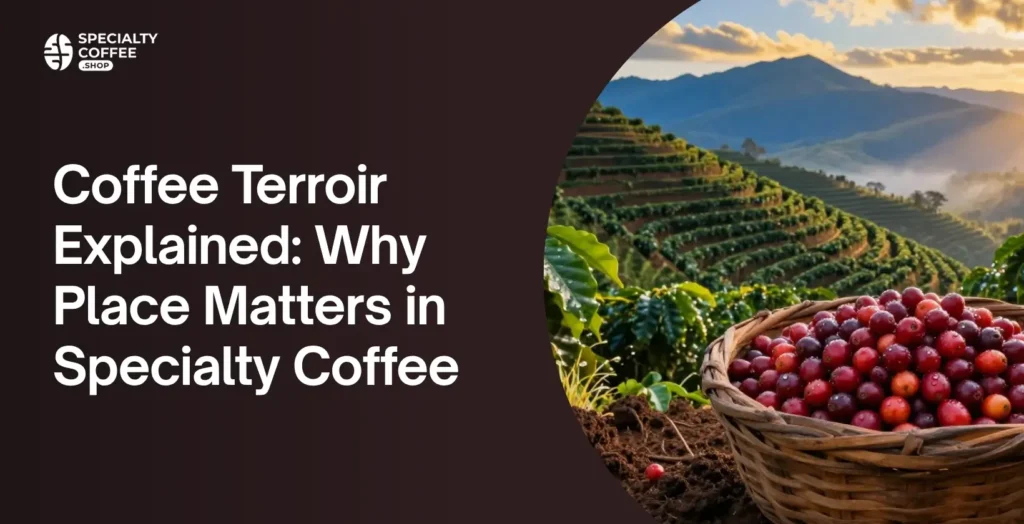
Coffee tastes are connected to place because the cherry develops under a specific mix of temperature, elevation, rainfall, sunlight, soil conditions, plant genetics, and farm management. That mix, coffee terroir, shapes the raw material a producer harvests, but it does not work alone. Processing, roasting, storage, and brewing can preserve, reshape, or hide what the growing environment contributed.
Understanding this helps you read origin labels without assuming that a country, mountain, or high elevation guarantees a particular flavor.
Quick take:
- Terroir describes the growing environment and its interaction with the coffee plant.
- Elevation matters largely through temperature and local climate; higher is not automatically better.
- Variety and farm practices affect how a plant responds to its location.
- Processing is separate from terroir, although it strongly changes what reaches the cup.
- Side-by-side tasting is the clearest way to explore a place.
What Is Terroir in Coffee?
In practical terms, terroir in coffee is the influence of a growing place on the character and quality potential of harvested coffee. It includes climate, altitude, slope, sun exposure, water availability, soil properties, shade, and agronomy.
Some definitions also include local knowledge and cultural practices. For tasting purposes, this simpler model is useful:
Terroir creates the conditions. Variety responds to them. Processing, roasting, and brewing translate the result into the cup.
How Coffee Terroir Shapes Flavor Potential
Temperature and Elevation
Elevation gets attention because it often changes temperature and growing conditions. Cooler environments can slow cherry development and influence bean density and flavor precursors.
But altitude is not a universal quality score. Latitude, slope exposure, cloud cover, wind, and weather change what a given elevation means. Always interpret the number within its location.
Rainfall, Shade, and Sunlight
Rainfall patterns affect flowering, fruit development, plant stress, and harvest conditions. Shade and sunlight influence the temperature around the tree and the pace of maturation.
Neither more shade nor more sun is automatically better. The question is whether the production system suits the site without creating excessive heat, moisture, or disease pressure.
Soil, Topography, and Variety
Soil stores water, supplies nutrients, and affects drainage. Topography changes exposure, runoff, wind, and local temperature. Plant genetics determines how a variety responds to those conditions.
Be cautious with claims such as “volcanic soil creates a mineral taste.” Soil affects plant development, but it is only one part of a complex system. Variety, nutrition, pruning, cherry selection, and harvest timing also matter.
Terroir vs. Origin, Processing, and Roast
These terms describe different stages:
- Origin identifies where the coffee came from, from country to individual plot.
- Terroir describes the growing conditions associated with that place.
- Processing turns harvested fruit into stable green coffee.
- Roasting develops aroma and flavor through heat.
- Brewing determines what is extracted into the cup.
An expressive fermentation can dominate a coffee. A darker roast may reduce differences between lots. An inconsistent brew can make clean coffee taste harsh or flat. Terroir is still present, but its signal passes through the entire production chain.
How to Taste Terroir More Clearly
Use comparison rather than memory:
- Select two coffees with the same species and, ideally, the same variety.
- Match their processing method, roast level, roast age, and brewing recipe.
- Taste them side by side at several temperatures.
- Record acidity character, sweetness, aroma, mouthfeel, finish, and structure.
- Repeat the tasting before concluding.
For example, compare two washed Bourbon lots from different regions roasted similarly. Then compare washed and natural lots from the same farm. The first comparison gives place a stronger role; the second reveals how processing can reshape one origin.
This is not a laboratory test. Harvest year, storage, roasting execution, and water chemistry can still affect the result. It is nevertheless more useful than comparing unrelated coffees and calling every difference terroir.
Why Coffees From the Same Country Differ
Country names are useful for navigation, but they are too broad to define one flavor profile. Within a country, coffee can be grown across different elevations, climates, varieties, soils, and production systems.
Look beyond the flag on the bag. Region, producer, farm, lot, variety, process, and harvest information provide a more meaningful picture. Traceability does not guarantee preference or quality, but it gives you better evidence for understanding the cup.
Common Coffee Terroir Mistakes
Avoid treating regional flavor descriptions as fixed rules, assuming the highest elevation must be best, or labeling every fermentation note as terroir. Also avoid comparing coffees roasted or brewed very differently.
Tasting notes are sensory descriptions, not added ingredients. Terroir describes potential and identity—not an automatic quality score.
A Practical Buying Checklist
Look for a specific origin, variety, elevation, processing method, harvest information, roast approach, and a useful description of acidity, sweetness, body, and finish.
Use those details as clues, then let tasting confirm them. The goal is not to predict every flavor. It is to make better comparisons.
Place Matters, but the Whole Chain Matters Too
Coffee terroir explains why location can shape the potential inside a green bean. Yet genetics, farming, processing, roasting, and brewing decide how clearly that origin reaches the cup.
Explore the wider world of specialty coffee to connect origin information with real coffees. When you are ready to compare regions, varieties, and processes, browse the Specialty Coffee shop and create your own side-by-side tasting.
FAQ
1. What is terroir in coffee?
Coffee terroir is the combined influence of a growing location’s climate, elevation, soil conditions, topography, shade, and farm management on coffee development. It describes the conditions in which the coffee plant and cherry grow.
2. Is coffee terroir the same as coffee origin?
No. Origin identifies a geographical location, while terroir describes the growing conditions within that location. A country may contain many regions, farms, and microclimates with different terroirs.
3. Does higher-altitude coffee always taste better?
No. Higher elevations may provide cooler growing conditions, but altitude alone does not guarantee quality. Latitude, variety, farm management, harvest quality, processing, and local weather also influence the result.
4. Can soil minerals be tasted directly in coffee?
Claims that a particular soil mineral creates an identical mineral flavor in the cup should be treated cautiously. Soil influences water availability, nutrition, and plant development, but cup flavor results from many interacting variables.
5. Does processing change coffee terroir?
Processing does not change where the coffee grew, but it can substantially change how that place is expressed. Fermentation and drying may amplify, transform, or obscure characteristics associated with the growing environment.
6. What is the best brewing method for tasting terroir?
No single method is mandatory, but cupping and consistent filter brewing make comparisons easier. Use the same grinder, water, ratio, temperature, and technique for every coffee being compared.
7. What should I check when buying coffee by origin?
Look for the region or farm, variety, elevation, processing method, harvest information, roast date, and sensory description. More detailed traceability gives you better context, although it does not guarantee that you will prefer the coffee.


