
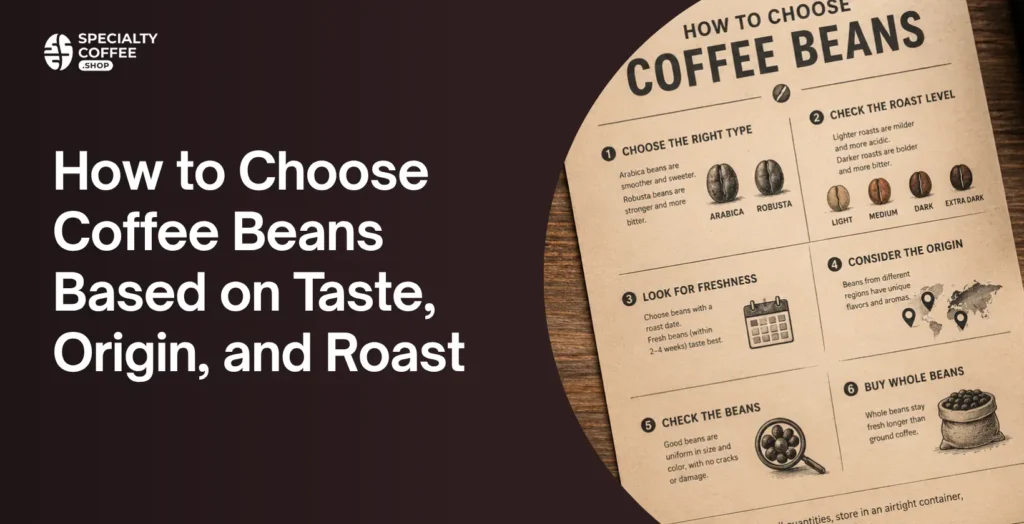
The best way to choose coffee beans is to start with freshness, then narrow by roast level, origin, and flavor until you find beans that suit how you brew and what you like to drink. Most disappointing cups come from stale, pre-ground coffee, not bad taste. Getting it right means fresher, better coffee for the same money. This guide walks through how to choose coffee beans step by step, from reading the label to matching a bean to your brewer.
How to choose coffee beans starts with three checks: buy whole beans with a visible roast date, match the roast level to your brew method, and pick an origin whose flavor notes you enjoy. Prioritize freshness and traceable, specialty-grade coffee over price, and adjust from there.
How to Choose Coffee Beans: The 5 Factors That Matter Most
When you learn how to choose coffee beans, five things carry most of the weight. Here they are, in the order a buyer should check them:
- Roast date and freshness. Coffee tastes best within a few weeks of roasting, so look for a printed roast date, not a distant “best before” stamp.
- Whole bean over pre-ground. Whole beans hold flavor far longer, while ground coffee goes flat within days once oxygen hits it.
- Roast level. Light, medium, or dark changes acidity, body, and how forgiving the beans are to brew.
- Origin and processing. Where the coffee grew, and whether it was washed or natural, shapes flavor more than almost anything else.
- Flavor notes you actually like. A bag can be flawless and still miss your taste, so read the tasting notes first.
“Specialty coffee” is not just marketing, either. The Specialty Coffee Association’s research sets the cupping scores and standards the trade uses to define specialty grade, so the label points to measurable quality, not hype. Nail these five, and the rest of how to choose coffee beans becomes fine-tuning.
The quickest shortcut is to buy premium specialty coffee beans that print the roast date, region and score on the label. If a bag can’t tell you when it was roasted, where it grew and how it cupped, you’re left guessing on all five factors above.
What Roast Level Should You Choose?
Match the roast level to your brew method and your taste, not to a vague idea of “strength.” Roast level controls acidity, sweetness, and body far more than it controls caffeine. Lighter roasts keep more origin character and brightness, while darker roasts trade that for bittersweet, smoky depth.
| Roast level | Tastes like | Best for | Good if you want |
|---|---|---|---|
| Light | Bright, fruity, floral, higher acidity | Pour-over, filter | Complex origin flavors |
| Medium | Balanced, sweet, rounded | Drip, most brewers | An everyday all-rounder |
| Medium-dark | Chocolatey, low acidity, fuller body | Espresso, moka pot | Richness with less brightness |
| Dark | Smoky, bittersweet, bold | Espresso, milk drinks | Flavor that cuts through milk |
Part of how to choose coffee beans is being honest about what you enjoy. If you love a splash of milk, a medium to dark roast holds up well. If you drink it black and chase clarity, lean lighter.
How Do Origin and Altitude Shape the Cup?
Origin and altitude set a coffee’s baseline flavor before roasting begins, so they are central to how to choose coffee beans with any precision. Higher-grown coffee, often 1,200 metres and above, develops brighter, more complex acidity, which is why altitude appears so often on specialty labels. Most specialty coffee is arabica rather than robusta, and arabica carries the delicate, sweet notes buyers look for. World Coffee Research tracks the varieties behind those flavors, and coffee’s long journey out of Ethiopia is a genuinely good story, well told by the Smithsonian.
A quick way to picture origin differences:
| Origin | Typical notes | Body and acidity |
|---|---|---|
| Ethiopia (Yirgacheffe) | Floral, citrus, tea-like | Light body, bright |
| Kenya (AA) | Blackcurrant, juicy, savory | Medium body, high acidity |
| Colombia (Huila) | Caramel, red fruit, balanced | Medium body, sweet |
| Uganda (Bugisu) | Chocolate, mild fruit, clean | Fuller body, gentle |
If you like bright and floral, a washed Ethiopia Yirgacheffe is a classic starting point. Prefer punchy acidity? Kenya AA delivers that blackcurrant-like brightness. For something balanced and sweet, Colombia Huila is easy to love, while a washed Uganda Bugisu from the slopes of Mount Elgon leans chocolatey and gentle.
That is really how to choose coffee beans by origin: pick the flavor family you like, then a specific lot. You can compare more in our origins guide on the blog.
Matching Beans to Your Brew Method
Your brewer should steer your bean choice, because grind size and extraction behave differently in each. Knowing how to choose coffee beans for espresso is different from choosing for a French press or pour-over. Espresso rewards medium to dark roasts that pull sweet and rich under pressure. Filter and pour-over let lighter roasts show off acidity and clarity. French press suits medium roasts with a fuller body.
If you only own a blade grinder, a medium roast is more forgiving of uneven grinds. And if you are still working out how to choose beans for a new brewer, start with a medium roast single-origin, which performs well across almost every method. That is the heart of how to choose coffee beans for any method: let the brewer lead. You can browse options by origin in the shop.
Common Mistakes to Avoid
Most bean-buying regret traces back to a handful of avoidable mistakes. Learning how to choose coffee beans well is as much about what to skip as what to pick.
- Buying pre-ground and keeping it for weeks. Ground coffee stales fast, so buy whole beans and grind per brew.
- Ignoring the roast date. No date usually means old stock, and freshness beats a fancy label.
- Chasing dark roast for “strength.” Dark roast is bolder in taste, not meaningfully higher in caffeine.
- Buying too much at once. Beans fade over a month or two, so buy what you will drink in three to four weeks.
- Storing beans in the fridge door. Moisture and odors creep in, so keep beans airtight, cool, and dark instead.
- Skipping traceability. A vague “100% arabica” with no origin tells you little. Traceable, single-origin specialty coffee tells you where and how it was grown, which is exactly the sourcing detail we publish about every lot.
Putting It All Together
In the end, how to choose coffee beans comes down to freshness first, then roast level, origin, and the flavors you personally enjoy. Trust the roast date over the marketing, and favor traceable, specialty-grade coffee from named single origins. Curated, verified, single-origin lots from major producing countries simply give you more reliable, better-tasting cups overall.
Ready to put this into practice? Explore the full range of curated, single-origin specialty coffees, from bright, floral cups to chocolatey lots like Uganda Bugisu, at SpecialtyCoffee.Shop. Browse by origin, check the sourcing behind each lot, and request a sample of whatever catches your eye. See what is available and start brewing far better coffee.
Frequently Asked Questions
1. How do you choose coffee beans for beginners?
The simplest approach to how to choose coffee beans as a beginner is a medium roast, single-origin bought as whole beans with a recent roast date. It is forgiving across brew methods and shows clear flavor without harsh bitterness. Once you know what you enjoy, branch into lighter roasts or new origins.
2. What is the difference between arabica and robusta beans?
Arabica is the specialty standard, prized for sweeter, more complex, less bitter flavor, while robusta is harsher, more bitter, and higher in caffeine. According to the ICO, arabica accounts for the majority of coffee grown worldwide. For flavor-focused buyers, specialty arabica is almost always the better choice.
3. How do I know if coffee beans are fresh?
Check the roast date on the bag, not the expiry date. Fresh specialty coffee lists a roast date within the last few weeks. Whole beans that smell rich and look slightly oily, for darker roasts, are good signs. If there is no roast date at all, assume the beans are old.
4. Should you buy whole beans or ground coffee?
Buy whole beans whenever you can. Whole beans keep their flavor for weeks, while ground coffee loses aroma and freshness within days as oxygen breaks it down. Grinding right before brewing is the single biggest upgrade most home brewers can make. A basic burr grinder pays for itself quickly.
5. Which coffee beans are best for espresso?
Medium to dark roasts work best for espresso because they pull sweet, rich, and full-bodied under pressure, with less sharp acidity. That said, lighter roasts can make bright, fruit-forward espresso if your equipment and skill allow. When deciding how to choose coffee beans for espresso, match the roast to the taste you want in the cup.


