Ethiopia Sidamo Coffee Overview
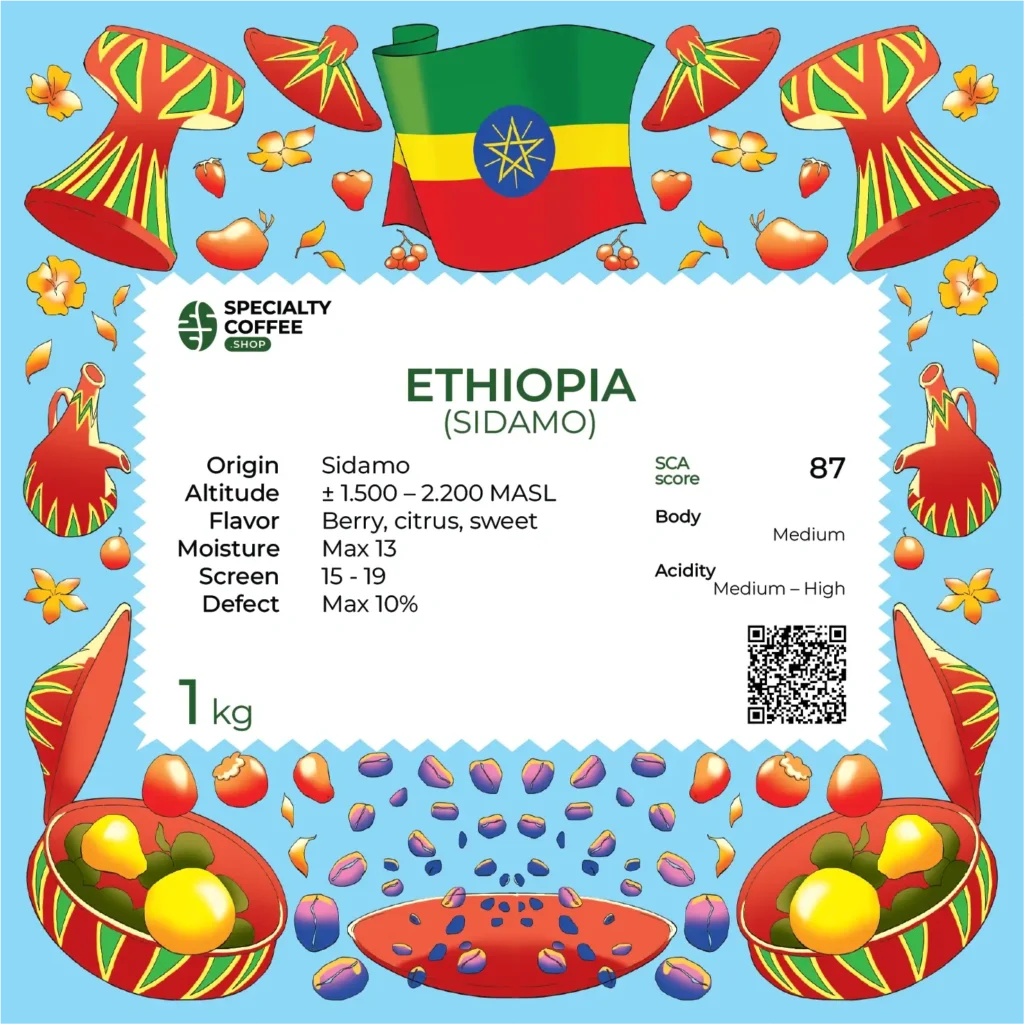
Ethiopia Sidamo coffee is a single-origin Arabica from the Sidama region of southern Ethiopia, grown along the eastern edge of the Great Rift Valley between 1,500 and 2,200 meters above sea level. It carries the aromatic signature Ethiopia is known for, but with more weight and fruit sweetness than the lighter, tea-like styles the country is usually associated with.
Sidamo is one of only three Ethiopian coffee names protected under the country’s own trademark programme, alongside Yirgacheffe and Harrar.
Flavor Profile
In the cup, Ethiopia Sidamo coffee opens with lemon and orange citrus, followed by stone fruit sweetness and a soft floral lift on the finish. It is bright without being sharp, and the sweetness holds as the cup cools.
Notes of citrus, apricot, honey, and light jasmine appear consistently across washed Sidamo lots. Compared with Yirgacheffe, the profile is rounder and more fruit-driven — the same Ethiopian aromatics, carried on a fuller cup.
Body and Acidity
This Ethiopia Sidamo coffee has a medium body with bright, clean acidity. The acidity is citric and lively but sits inside the cup rather than dominating it, and the medium body gives the fruit sweetness something to hold onto. The result stays aromatic while feeling more substantial than a classic tea-like Ethiopian filter.
Origin and Growing Region
Sidama sits in southern Ethiopia around Hawassa and the highlands of Bensa, Aroresa, and Bona Zuria. Coffee here grows in garden plots beside food crops, shaded by native trees, and is farmed almost entirely by smallholders who deliver cherries to local washing stations.
The trees are indigenous heirloom varieties, which is why Ethiopian coffee carries aromatic complexity that planted varieties elsewhere cannot copy.
Best Brewing Methods
Ethiopia Sidamo coffee performs well across filter and espresso. On V60, Kalita, Chemex, or Aeropress, water at 92–94°C brings out the citrus and stone fruit cleanly. As espresso, it gives a bright, fruit-forward shot with more body than most Ethiopian lots, which also makes it the more forgiving choice in milk — it holds its character in a flat white where lighter Ethiopian coffees disappear.