
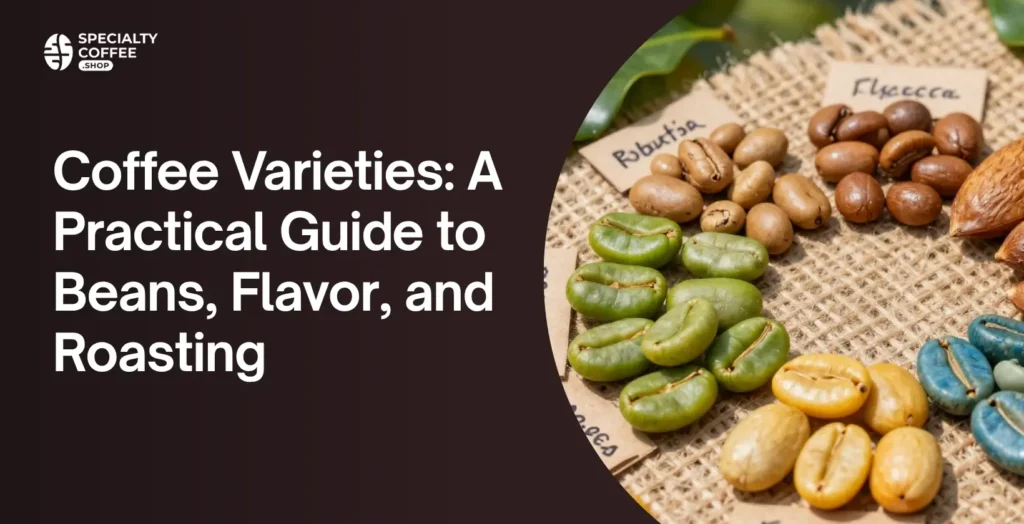
Coffee tastes different from one cup to another for a clear reason. The bean carries its own genetic character before it reaches the roaster. Origin, soil, altitude, processing, roast profile, and brewing method all shape the final cup. Still, the variety gives the coffee its basic potential.
That is why understanding coffee varieties helps drinkers choose better beans and helps roasters bring out the right flavor.
What Are Coffee Varieties?
Coffee varieties are genetic types within a coffee species. They work much like grape varieties in wine. Typica, Bourbon, Caturra, Gesha, SL28, and Pacamara can produce different cup profiles because they carry different traits.
However, variety never works alone. A Bourbon grown in Rwanda may taste different from a Bourbon grown in Brazil. A washed Gesha may taste cleaner than a natural Gesha. A light roast may highlight acidity, while a darker roast may soften fruit notes. Good coffee depends on the full chain, not only the name printed on the bag.
Arabica: The Main Species in Specialty Coffee
Arabica dominates the specialty coffee market because it often offers sweetness, acidity, aroma, and complexity. It usually grows best at higher elevations and needs careful farming. Arabica plants can produce delicate flavors, but they can also face disease, low yield, and climate stress.
Popular Arabica varieties include Typica, Bourbon, Caturra, Catuai, Gesha, SL28, Pacamara, Mundo Novo, and Castillo. Typica often produces a clean cup. Bourbon can taste sweet and round.
Caturra often brings bright acidity. Catuai gives farmers better yields. Gesha is known for floral, tea-like, and tropical notes. SL28 can show blackcurrant and citrus. Pacamara can produce bold aromatics and creamy body.
Robusta: Strong, Bold, and More Important Than Ever
Robusta has a different identity. It usually contains more caffeine than Arabica and tends to taste stronger, heavier, and more bitter. Many commercial blends use Robusta for body, crema, and intensity, especially in espresso.
For years, many people treated Robusta as lower quality. That view is too simple. Fine Robusta now receives more attention from roasters because it can offer clean flavor, strong body, and resilience in warmer climates. As climate pressure grows, Robusta may play a bigger role in the future of coffee.
Liberica and Excelsa: Rare but Worth Knowing
Liberica and Excelsa appear less often, but they add diversity to the coffee world. Liberica beans are usually larger and can taste woody, smoky, fruity, or slightly floral. Excelsa often gives tart fruit, complexity, and a sharp edge to blends. These species remind us that coffee is broader than the Arabica and Robusta debate.
Why Roasters Care About Variety
A roastery does not roast every bean the same way. Dense high-grown Arabica may need a different heat strategy than a softer low-grown coffee.
A delicate Gesha may lose its floral notes if roasted too darkly. A Brazilian natural may shine with a medium roast that brings out nut, cocoa, and sweetness.
This is where coffee varieties meet roast profiling. Variety gives the potential. Roasting develops that potential. A skilled roaster decides how much acidity, sweetness, aroma, and body to highlight. The goal is to make the coffee taste clear, balanced, and honest to its character.
Processing Also Changes the Flavor
Processing means how farmers remove the fruit from the coffee seed. It can change the final taste as much as variety.
Washed coffee often tastes clean, bright, and structured. Natural coffee can taste fruity, sweet, and heavy. Honey process coffee often sits between washed and natural, with more sweetness and texture. Experimental processes can create intense fruit, spice, wine-like notes, or unusual aromatics.
This is why two coffees from the same variety can taste very different. A washed Caturra from Colombia may taste crisp and citrusy. A natural Caturra may taste sweeter, fuller, and more fruit-forward.
How to Read a Coffee Bag
A good coffee label should help you make a better choice. Look for origin, producer, variety, processing method, roast level, flavor notes, and roast date. If the bag lists coffee varieties, use that information as a clue, not a guarantee.
For example, Gesha may suggest floral notes, but poor farming or poor roasting can still ruin the cup. Bourbon may suggest sweetness, but roast level and freshness still matter.
Flavor notes describe what the coffee reminds the roaster of. They do not mean the coffee contains added flavoring.
How to Choose the Right Coffee
If you like bright, floral, and fruity coffee, choose light-roasted Arabica from Ethiopia, Kenya, Panama, or Colombia. Look for Gesha, SL28, or high-quality Bourbon. Choose washed processing for clarity or natural processing for more fruit.
If you like sweet, balanced coffee, choose medium roast beans from Brazil, Guatemala, Colombia, or Rwanda. Bourbon, Caturra, Catuai, and Mundo Novo can work well for daily brewing.
If you like bold coffee with milk, choose an espresso blend or a medium-dark roast. A blend of Arabica and Robusta can give body, crema, and intensity.
The Future of Coffee Varieties
The future of coffee will not depend only on famous names. Farmers and researchers continue to develop disease-resistant, productive, and climate-resilient plants. Hybrid varieties may help protect quality as temperatures rise and diseases spread. Fine Robusta, Liberica, and lesser-known Arabica types may also gain more attention.
Final Thoughts
Understanding coffee varieties makes coffee easier to enjoy. You do not need to memorize every name. Start with the basics. Learn the difference between Arabica and Robusta. Notice how Typica, Bourbon, Gesha, Caturra, and SL28 taste. Compare washed and natural processing. Then pay attention to roast date and brew method.
A great cup starts with the bean, but it does not end there. The best roaster connects variety, origin, processing, roast profile, and freshness into one clear flavor experience.
Ready to explore better coffee? Choose freshly roasted beans, check the variety and roast date, and brew a cup that matches your taste.


