
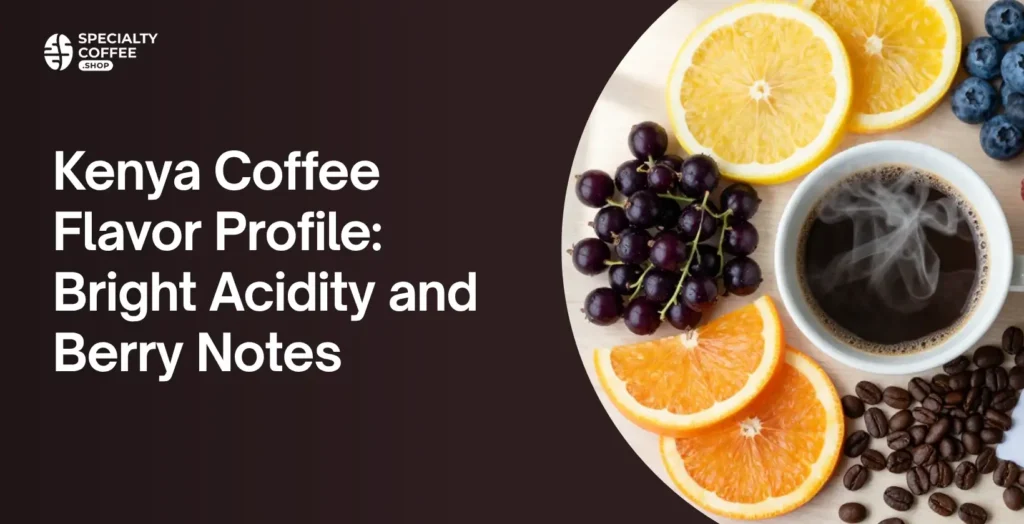
The Kenya coffee flavor profile is defined by vivid, juicy acidity, blackcurrant and berry notes, citrus lift, layered sweetness, and a clean, often syrupy finish. That combination makes a well-roasted Kenyan coffee feel energetic rather than simply sour.
The exact cup still changes with region, variety, processing, roast, and brewing method. This guide explains what to expect, why those flavors develop, and how to taste and brew them clearly.
Quick take:
- Acidity: Bright, wine-like, citrusy, or currant-like
- Fruit: Blackcurrant, blackberry, raspberry, red cherry, and grapefruit
- Sweetness: Cane sugar, honey, or ripe-fruit sweetness
- Body: Juicy to syrupy, with a long, clean finish
What Does the Kenya Coffee Flavor Profile Taste Like?
A classic Kenya coffee flavor profile is intense, clean, and fruit-forward. Blackcurrant is the signature reference, but many cups also suggest blackberry, raspberry, cranberry, red grape, grapefruit, or orange. Some lots carry floral, tropical-fruit, spice, or savory tomato-like impressions.
Acidity is central to the experience. In good coffee, it should resemble the lively brightness of citrus or fresh berries, supported by sweetness and body.
World Coffee Research describes Kenyan Arabica as prized for acidity, intensity, and flavor complexity. Sweet Maria’s also highlights citrus, blackcurrant, berry, cane sugar, and wine-like character in high-quality lots.
For broader industry context, consult the World Coffee Research Kenya overview.
Why Is the Kenya Coffee Flavor Profile So Distinctive?
The Kenya coffee flavor profile comes from several factors working together, not from origin alone.
1. SL28, SL34, and Other Varieties
SL28 and SL34 are closely associated with Kenyan coffee. World Coffee Research rates both varieties as having exceptional quality potential at high altitude.
SL28 is drought-tolerant but vulnerable to major coffee diseases, while SL34 is highly susceptible to coffee berry disease. Kenya also grows Batian, Ruiru 11, K7, and other varieties, so not every lot will taste the same.
For deeper technical context, see the World Coffee Research SL28 variety profile.
2. High-Elevation Growing Conditions
Many Kenyan coffees grow in elevated central highlands near the equator. Cool conditions and altitude can support slow seed development and structured acidity, although farm management, variety, and harvest quality remain just as important.
World Coffee Research notes that altitude affects the quality and agronomic potential of SL28, with higher optimal elevations near the equator.
3. Washed Processing and Soaking
Kenya is strongly associated with washed processing. At many mills, depulped coffee undergoes fermentation, washing, an additional clean-water soak, and drying on raised beds.
This careful separation can help create the clarity that makes berry and citrus notes easy to recognize. Sweet Maria’s describes extended fermentation and a soaking stage as distinctive parts of the Kenyan wet-process tradition.
Read the Sweet Maria’s Kenya coffee overview for a detailed processing explanation.
Kenya AA Coffee Flavor Profile: What Does AA Mean?
The Kenya AA coffee flavor profile is often bright, fruity, and full, but “AA” does not guarantee a specific taste or quality score. AA mainly identifies a large bean screen-size grade, commonly screen 17/18. Smaller AB or PB lots can still outperform an AA lot in the cup.
Treat AA as one useful label, not the final buying decision. Check the region, washing station or estate, variety, process, harvest information, roast date, and tasting notes.
How Roast Level Changes the Cup
A light to medium roast usually preserves the recognizable Kenya coffee flavor profile. Expect sharper berry definition, citrus clarity, floral aromatics, and a tea-like or juicy finish.
A darker roast can reduce perceived fruit clarity while adding caramelized, cocoa-like, smoky, or bitter flavors. This may suit espresso or milk drinks, but it can hide the qualities that make the origin distinctive.
Roast labels are not standardized. Compare the bean color, development style, and the roaster’s stated brewing intention rather than relying only on “light,” “medium,” or “dark.”
How to Brew Kenyan Coffee Clearly
Pour-over is a practical way to separate acidity, sweetness, and finish. Use this as a starting recipe:
- 15 grams of coffee
- 250 grams of water
- Medium-fine grind
- Water around 200°F to 205°F
- Total brew time of roughly 2:45 to 3:30
- Gentle agitation rather than aggressive stirring
Taste the coffee as it cools. A hot cup may seem mostly bright, while blackcurrant, berry sweetness, and syrupy texture often become clearer at a lower temperature.
For a simple field test, brew the same coffee twice. Keep the dose and water fixed, then grind the second cup slightly coarser. If the first tastes dry, harsh, or hollow, the coarser brew may reveal a cleaner Kenya coffee flavor profile. If the second tastes thin and sharply sour, return to a finer grind.
Kenya vs. Ethiopia: What Is the Difference?
Kenyan and Ethiopian coffees can both taste floral and fruit-forward, but their common expressions differ.
Washed Kenyan lots often feel more concentrated, currant-like, citrusy, and structured. Washed Ethiopian coffees may lean toward jasmine, bergamot, lemon, and tea, while natural Ethiopian coffees often emphasize ripe berries and fermented fruit.
This is a comparison, not a fixed rule. Processing, variety, roast, and individual lot quality can outweigh country-level expectations.
Common Tasting Mistakes
Do not assume every bright sensation is good acidity. Underextraction can create thin, sharp sourness without enough sweetness. Overly dark roasting can erase berry notes. Hard or poorly balanced brewing water may also distort acidity.
Another mistake is buying by grade alone. The Kenya AA coffee flavor profile depends on the actual lot, not only bean size. Use AA as a screening clue, then evaluate traceability, freshness, sensory notes, and the intended brewing method.
A Quick Buying Checklist
Choose a Kenyan coffee with:
- A clear region, cooperative, washing station, or estate
- Variety information when available
- A stated washed, natural, or experimental process
- A recent roast date for roasted coffee
- Notes that match your preference, such as blackcurrant, citrus, berry, or tropical fruit
- A roast level suited to filter, espresso, or milk drinks
The best way to understand the Kenya coffee flavor profile is to compare two traceable lots side by side. Start with a washed, light-to-medium roast, then note the acidity type, fruit character, sweetness, body, and finish.
To compare this Kenya coffee flavor profile with other origins, explore specialty coffee from traceable global origins.
Bright acidity and berry notes become easier to understand when you taste them in a clearly identified lot.
A traceable selection lets you compare process, origin details, and sensory character with more confidence.
Browse the Kenya coffee collection and explore a coffee that fits your preferred brewing style.
FAQ
1. Does all Kenyan coffee taste like blackcurrant?
No. Blackcurrant is a common reference, but Kenyan coffees can also show citrus, raspberry, blackberry, tropical fruit, florals, spice, or savory notes. Region, variety, processing, roast, and brewing all affect the final cup.
2. Is Kenya AA better than Kenya AB?
Not automatically. AA primarily describes a larger bean screen size. AB beans are smaller, but an excellent AB lot can taste better than an average AA lot. Cup quality depends on more than bean size.
3. Is Kenyan coffee supposed to taste sour?
It should taste bright, not unpleasantly sour. Balanced Kenyan coffee combines acidity with sweetness, body, and a clean finish. Thin, sharp sourness may indicate underextraction or an unsuitable brewing recipe.
4. What brewing method works best for Kenyan coffee?
Pour-over methods usually highlight berry notes and acidity clearly. AeroPress and batch brewers can also work well. Espresso produces a more concentrated result, but the recipe may need a longer ratio to control sharp acidity.
5. Should Kenyan coffee be roasted light or medium?
Light to medium roasting usually protects fruit clarity and acidity. Medium-dark roasting can add body and caramelized flavors but may reduce blackcurrant, citrus, and floral definition.
6. Can Kenyan coffee work in espresso?
Yes. It can create a vivid, fruit-focused espresso or add brightness to a blend. However, highly acidic light roasts may require a finer grind, higher water temperature, or longer yield to reach sufficient sweetness.
7. What should I check before buying Kenyan coffee?
Check the region, producer or washing station, variety, process, grade, harvest information, roast date, and flavor notes. Do not choose only because the label says AA.


