
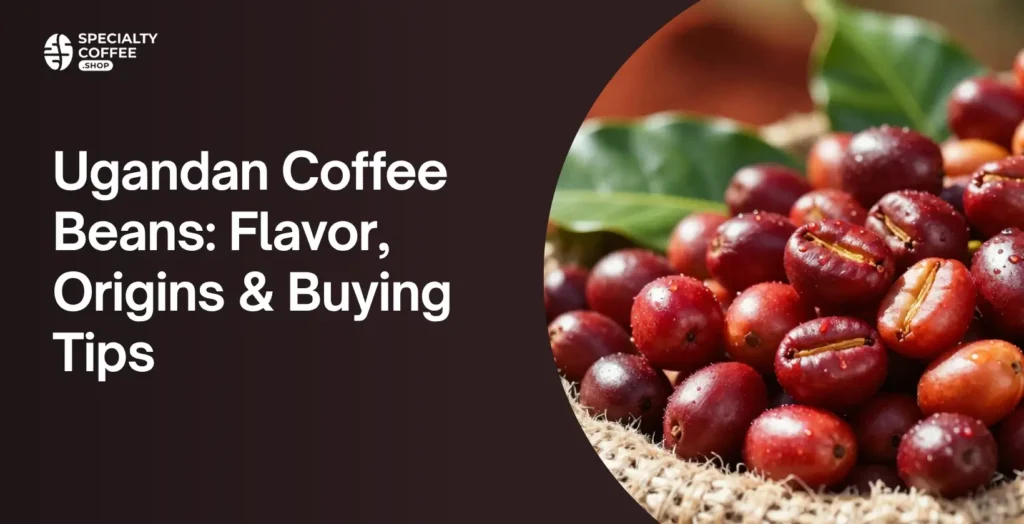
Ugandan coffee beans are worth paying attention to because they offer more range than many people expect: structured Arabica from highland regions, bold Robusta from lower-altitude areas, and specialty lots that can work across filter, espresso, and blended profiles.
For anyone comparing origins, Uganda coffee brings a useful balance of body, sweetness, earthy depth, and regional complexity. This guide explains how Uganda coffee tastes, where it comes from, how Uganda green coffee behaves during roasting, and what to check before buying.
Quick takeaways:
- Uganda produces both Arabica and Robusta, so flavor can vary widely by region and lot.
- Bugisu coffee from the Mount Elgon area is one of the best-known Arabica profiles.
- Uganda green coffee should be evaluated by moisture, screen size, defects, processing, and cup profile.
- The best choice depends on whether you want clarity, body, sweetness, or blend structure.
- Always check the lot details rather than judging Uganda coffee as one single flavor category.
What Makes Ugandan Coffee Beans Worth Trying?
Ugandan coffee beans stand out because they combine East African origin character with a heavier body and more grounded sweetness than many brighter African coffees. Instead of only chasing high acidity or floral aromatics, Uganda coffee often gives a practical cup: balanced, structured, and flexible.
That flexibility matters. A well-selected Uganda Arabica can work beautifully as a medium roast for filter coffee, while a more body-forward profile can perform well in espresso or milk-based drinks. Some lots show fruit and vanilla-like sweetness. Others lean toward cocoa, nuts, spice, or earthy undertones.
The key is not to ask, “Is Uganda coffee good?” A better question is, “Which Uganda coffee lot fits the cup profile I need?”
What Do Ugandan Coffee Beans Taste Like?
Ugandan coffee beans commonly taste sweet, rounded, and medium-to-full bodied, with flavor notes that may include red fruit, dried fruit, vanilla, cocoa, nuts, spice, and gentle earthiness. The exact profile depends on region, variety, altitude, processing, and roast level.
Common Flavor Notes
Bugisu Arabica, especially from the Mount Elgon area, is often appreciated for a cup that can feel structured rather than aggressively bright. You may find fruit, mild acidity, soft sweetness, and a nutty or earthy base.
A practical tasting note might look like this:
“At a medium roast, the coffee opens with soft fruit and vanilla-like sweetness, then settles into a nutty, cocoa-like body with a clean finish.”
That profile is useful because it gives enough character to be memorable but not so much intensity that it becomes difficult to brew consistently.
Body, Acidity, and Sweetness
Uganda coffee often has a more grounded mouthfeel than very citrus-driven East African coffees. The acidity can be pleasant, but it is not always sharp or sparkling. That makes it a good option when you want a coffee with structure, not just brightness.
For roasting, this means you should not automatically push the roast too light. Some Uganda lots open better with a careful medium-light to medium approach, where sweetness and body have time to develop without flattening the origin character.
Read also: Single Origin Coffee: A Deep Dive into Quality and Flavor
Uganda Coffee Beans: Arabica vs Robusta
Uganda coffee beans are not one single category because Uganda grows both Arabica and Robusta. Understanding the difference helps you make a better buying decision.
Arabica from Highland Areas
Ugandan Arabica is commonly associated with higher-altitude regions such as Mount Elgon, Bugisu, Rwenzori, and other suitable highland zones. These coffees are usually chosen for more refined acidity, cleaner sweetness, and more distinct flavor separation.
Bugisu is especially important because it gives buyers a clear origin story: highland-grown Arabica with enough body to feel satisfying and enough complexity to stay interesting.
Robusta as Uganda’s Production Backbone
Uganda is also strongly known for Robusta. This matters because Robusta shapes the country’s coffee identity, export structure, and agricultural landscape. Good Robusta can bring body, crema, intensity, and blend support, but it should still be judged by quality, processing, and cup result.
Do not assume all Robusta is low quality. Also, do not assume all Uganda coffee tastes like Robusta. The best approach is to evaluate the exact lot, not the country name alone.
Key Uganda Coffee Regions to Know
Uganda coffee regions matter because geography strongly affects cup profile. Altitude, rainfall, soil, variety, and processing infrastructure all influence what ends up in the cup.
Bugisu and Mount Elgon
Bugisu, located around the Mount Elgon area in eastern Uganda, is one of the most recognized names for Ugandan Arabica. Coffees from this area can show pleasant acidity, rounded sweetness, and a flavor structure that works well for both single-origin use and espresso-friendly roasting.
For a medium roast test, try tracking first crack development carefully. Push too fast, and the cup may become sharp or uneven. Push too far, and the fruit notes may fade into generic roastiness.
Rwenzori and Western Uganda
Western Uganda, including areas around the Rwenzori Mountains, is another important region for Arabica. Profiles can vary, but many lots are valued for fruit character, sweetness, and a fuller structure.
This region is worth exploring if you want Uganda coffee with a slightly more expressive fruit direction while keeping a grounded body.
Central and Northern Uganda
Central Uganda is closely associated with Robusta production, while some northern areas have been developing more coffee activity over time. These regions add diversity to Uganda’s coffee map and show why the country should not be reduced to one simple flavor description.
How Uganda Green Coffee Performs in Roasting
Uganda green coffee often rewards a roast approach that protects sweetness while developing body. The safest starting point is usually not an extremely fast roast. Give the coffee enough energy to build structure, but avoid scorching, baked notes, or excessive roast dominance.
For sample roasting, start with a controlled profile and compare three roast levels:
- Light-medium: best for checking acidity and fruit clarity
- Medium: best for sweetness, balance, and body
- Medium-dark: useful for espresso testing, but watch for loss of origin character
Pay attention to aroma after grinding. If the dry fragrance is sweet but the cup tastes flat, the roast may need better development after first crack. If the cup tastes woody, papery, or dull, check green age, storage, moisture, and defect count before blaming the origin.
Practical Buying Checklist for Uganda Coffee
The best way to choose Uganda coffee is to evaluate both the story and the specifications. A good origin story is helpful, but it should be supported by measurable details.
Before buying, check:
- Origin and region: Uganda, Bugisu, Mount Elgon, Rwenzori, or another specific area
- Coffee type: Arabica or Robusta
- Format: roasted coffee or Uganda green coffee
- Altitude: useful for predicting density and roast behavior
- Processing method: washed, natural, honey, or other
- Cupping score: helpful, but not the only decision factor
- Moisture level: important for green coffee stability
- Screen size: useful for roast consistency
- Defect value or grading notes: important for quality control
- Flavor notes: should match your intended brew method
If a product page gives a strong cupping score but little information about processing, moisture, or defects, ask for more detail before making a larger purchase.
Common Mistakes When Choosing Uganda Coffee
The most common mistake is judging all Uganda coffee by one past experience. Uganda has multiple regions, varieties, and processing styles, so one lot cannot represent the entire country.
Another mistake is choosing only by flavor notes. “Fruity” or “nutty” sounds useful, but those words mean little without roast level, freshness, processing, and brew context.
A third mistake is roasting every Uganda Arabica like a high-acid Kenya or Ethiopia. Some Uganda lots need a slightly different approach: enough development to unlock sweetness, but not so much that the cup becomes heavy and muted.
Uganda Coffee vs Other East African Coffees
Uganda coffee is often less aggressively bright than some Kenyan or Ethiopian profiles, but that can be an advantage. If you want a cup that feels balanced, sweet, and full without losing origin identity, Uganda can be a smart choice.
Compared with Ethiopia, Uganda may be less floral but more grounded. Compared with Kenya, Uganda may be less sharply acidic but more approachable. Compared with Rwanda or Burundi, Uganda can feel broader in body and more flexible across roast levels.
That does not make one origin better than another. It simply means Uganda deserves to be evaluated for what it does well: structure, balance, sweetness, and practical versatility.
Conclusion
Ugandan coffee beans are a strong option when you want an origin that offers both character and usability. The best lots can deliver sweetness, body, fruit, and earthy-nutty depth without becoming difficult to brew or roast.
If you are exploring Uganda coffee for the first time, start with a specific region such as Bugisu rather than a generic country-level label. Check the specs, roast with intention, and cup the coffee at more than one roast level.
For a direct starting point, you can explore Specialtycoffee.shop’s Uganda Bugisu coffee here: https://specialtycoffee.shop/product/uganda/uganda-bugisu/
FAQ
1. What are Ugandan coffee beans known for?
Ugandan coffee beans are known for variety. The country produces both Arabica and Robusta, so the cup can range from sweet and fruity to bold, full-bodied, earthy, or nutty.
2. Is Uganda coffee Arabica or Robusta?
Uganda produces both. Robusta makes up a large share of national production, while Arabica is commonly grown in highland regions such as Bugisu, Mount Elgon, and Rwenzori.
3. What does Uganda Bugisu coffee taste like?
Uganda Bugisu coffee often has a balanced profile with medium acidity, rounded body, and notes that may include fruit, nuts, cocoa, vanilla-like sweetness, or gentle earthiness.
4. Is Uganda green coffee good for roasting?
Yes, Uganda green coffee can be good for roasting when the lot has clear specifications, stable moisture, reasonable defect control, and a cup profile that fits your target roast style.
5. How should I roast Uganda coffee?
Start with a medium-light to medium profile, then adjust based on cupping. Many Uganda Arabica lots benefit from enough development to build sweetness and body without pushing into heavy roast flavors.
6. Is Uganda coffee better than Ethiopian or Kenyan coffee?
Not better or worse, just different. Uganda coffee often has more body and grounded sweetness, while Ethiopian coffees may be more floral and Kenyan coffees may show brighter acidity.
7. What should I check before buying Uganda coffee?
Check region, variety, processing method, altitude, moisture, screen size, defect notes, cupping score, roast level, and whether the flavor notes match your intended brewing use.
If you want to understand Uganda coffee beyond basic origin descriptions, tasting a specific lot is the most useful next step. A well-documented Uganda Bugisu coffee can help you evaluate sweetness, body, acidity, and practically roast potential.
Explore the Uganda coffee selection from Specialtycoffee.shop here: Uganda Bugisu coffee


