
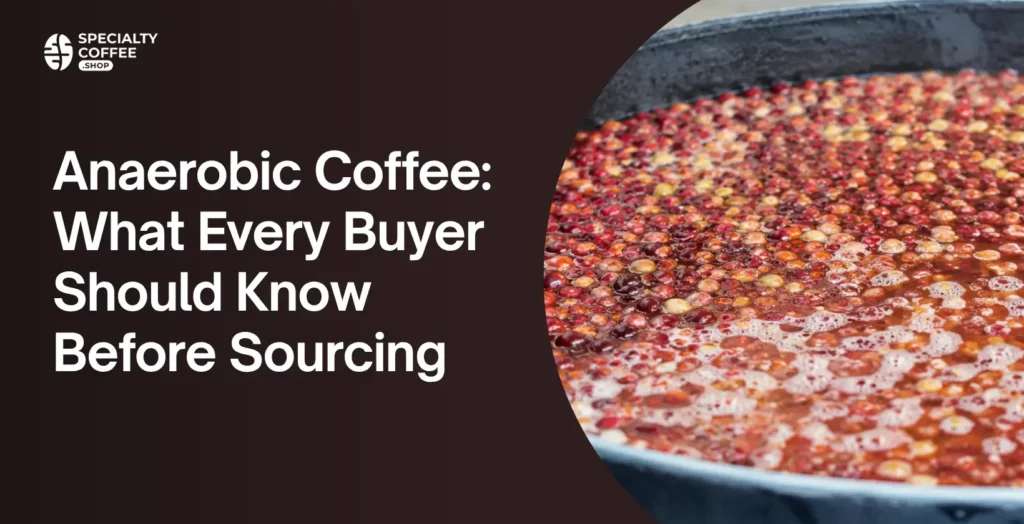
Anaerobic coffee is processed by fermenting cherries or beans in a sealed, oxygen-free tank, and that single change is why buyers are paying attention. The method produces bolder, fruitier, more aromatic cups than traditional washed or natural processing, which makes it a sharp way to differentiate a roastery or cafe menu. But the same intensity that excites also raises the stakes on sourcing, because flavor swings widely between a brilliant lot and a flawed one. This guide covers what the process is, how it shapes the cup, what to check before you buy, and where to source it well.
Anaerobic coffee is specialty coffee fermented without oxygen, usually in sealed stainless tanks or barrels, before drying. Removing oxygen changes which microbes drive fermentation, producing intense fruit, wine, and spice notes that washed and natural lots rarely reach. Producers control time, temperature, and pH to shape a distinctive, traceable cup profile
What Is Anaerobic Coffee?
Anaerobic coffee is coffee fermented in a sealed, oxygen-deprived environment before it is dried. Most processing happens with oxygen present. Here, producers seal cherries or de-pulped beans in tanks so a different set of microbes takes over. The term borrows from biology, where anaerobic simply means without oxygen.
The technique moved from the fringes to the spotlight after it featured in World Barista Championship routines, and demand has climbed since. It sits at the premium, experimental end of a global market the International Coffee Organization tracks in detail. For a primer on how processing shapes flavor across regions, the specialty coffee origins guide is a useful starting point.
How Is Anaerobic Coffee Made?
Producers ferment the coffee in a sealed vessel, control the variables, then dry it like any other lot. In practice, most anaerobic coffee starts as either a washed or a natural lot, with the fermentation step swapped for a closed tank.
The core steps usually look like this:
- Harvest and sort. Only ripe cherries go in, since defects amplify under intense fermentation.
- Seal the tank. Cherries (anaerobic natural) or de-pulped beans (anaerobic washed) go into airtight stainless steel or food-grade barrels.
- Control the ferment. Producers track time, temperature, and pH, sometimes letting carbon dioxide build, a nod to carbonic maceration borrowed from winemaking.
- Dry and rest. Beans dry on raised beds or in mechanical dryers, then rest before milling and export.
Fermentation length (often 24 to 120 hours) and temperature decide whether a lot lands fruity and clean or tips into funk. For a deeper technical walkthrough, Perfect Daily Grind has covered these methods in detail.
Why Does Anaerobic Processing Taste So Different?
Sealing out oxygen changes the fermentation chemistry, and that reshapes the cup. With less oxygen, microbes produce different acids and aromatic compounds, which is what makes anaerobic coffee taste so bold and distinct.
Expect notes that lean tropical, winey, or boozy: think pineapple, red berries, cinnamon, even rum. The body often reads heavier and the finish longer than a comparable washed lot.
It is also polarizing. Some drinkers love the intensity. Others find it overwhelming or too far from the origin’s classic character. That trade-off matters when you buy for a specific audience. Variety, altitude, and terroir still set the foundation, and groups like World Coffee Research study how genetics shape these baseline flavors before processing ever begins.
Anaerobic vs Washed vs Natural: A Quick Comparison
Processing is the biggest lever on flavor after origin and variety, so comparing methods side by side helps. Among the three, anaerobic coffee sits apart for intensity and control, while washed prizes clarity and natural prizes sweetness.
| Process | Oxygen | Typical flavor | Consistency | Relative cost |
|---|---|---|---|---|
| Washed | Present | Clean, bright, origin-clear | High | Lower |
| Natural | Present | Sweet, fruity, full-bodied | Medium | Moderate |
| Anaerobic | Sealed out | Bold, winey, complex | Lower without tight control | Higher |
Washed lots like a classic Ethiopia Yirgacheffe show off floral, tea-like clarity, while a Kenya AA brings bright blackcurrant acidity. Anaerobic versions push those same origins somewhere louder. Neither is better. They serve different cups and different customers.
What Should You Check When Sourcing Anaerobic Coffee Beans?
Start with traceability, cupping scores, and lot consistency, because intense processing magnifies both quality and flaws. When you evaluate anaerobic coffee, ask for documented origin, processing details, and a recent cupping assessment before committing.
Key things to verify:
- Origin and producer. A named farm or cooperative beats a vague country label.
- Processing specifics. Fermentation time, temperature, and the base style (washed or natural).
- Cup score and notes. Look for scores assessed against Specialty Coffee Association protocols.
- Freshness and moisture. Green coffee should sit in a safe moisture range and ship promptly.
You can compare options across origins on the Specialtycoffee.shop products page to see how processing and origin are documented for each lot.
Common Sourcing Mistakes to Avoid
The biggest mistakes come from chasing novelty over quality. With anaerobic coffee, the margin for error is thinner, so buying on hype instead of cup data leads to disappointing lots.
Watch for these traps:
- Ignoring over-fermentation. Boozy is good. Vinegary and rotten is not. Always taste first.
- Skipping traceability. No lot data means no way to repeat a good result or diagnose a bad one.
- Pushing the roast level too dark. Heavy development buries the delicate aromatics you paid a premium for.
- Buying volume too early. Order a sample, cup it, then scale.
Treating these lots like commodity coffee is the fastest way to waste money on a profile your customers may not even want.
A Practical Sourcing Checklist for Anaerobic Green Coffee
Use a simple, repeatable checklist so each purchase clears the same bar. Before you buy anaerobic green coffee, run these eight checks in order.
- Confirm the origin, farm, or cooperative is named.
- Request the processing method and fermentation details.
- Review a recent cupping score and tasting notes.
- Check moisture content and harvest date.
- Order a sample and cup it yourself before scaling.
- Compare the lot against a washed benchmark from the same origin.
- Confirm packaging, storage, and shipping timelines.
- Verify the supplier shares traceability you can stand behind.
This is the same discipline that separates a sourcing program built on anaerobic coffee from one that simply buys what looks exciting.
How Specialtycoffee.shop Approaches Sourcing
Specialtycoffee.shop focuses on curated single-origin specialty coffee from major producing countries, with quality verification and traceability built into every listing. The goal is simple: make it easy to source distinctive lots, including anaerobic coffee, without guessing about origin or quality.
That means each coffee is tied to a named region and a documented profile. Alongside experimental lots, the catalog carries clean, dependable washed Arabica single origins, from a balanced and sweet Colombia Huila to a Uganda Bugisu grown in the Mount Elgon region, so roasters can build a menu that mixes the familiar with the adventurous.
If you want the sourcing philosophy and verification approach in more depth, the about Specialtycoffee.shop page lays it out, and new origin notes land regularly on the blog.
Frequently Asked Questions
What does anaerobic fermentation do to coffee? It ferments the cherries or beans in a sealed, oxygen-free tank, which shifts microbial activity and builds deeper, fruitier, sometimes boozy flavors. The closed environment gives producers tighter control over temperature and time, so the resulting cup tends to be bolder and more aromatic than washed or natural lots.
Is anaerobic processing worth the higher price? Often yes, if the lot is well made and verified. Anaerobic lots usually cost more because they need sealed tanks, careful monitoring, and smaller batches. For roasters chasing a standout single origin or a competition-level cup, that premium can be justified, provided the traceability and quality data hold up.
How can you tell if a lot is over-fermented? Look for sharp vinegary, solventy, or rotten-fruit notes that overpower sweetness. Over-fermentation happens when the process runs too long or too warm, pushing flavors past pleasant into defective. Reputable suppliers cup every lot and share scores, so always ask for tasting notes and a recent cupping assessment before you commit.
Does anaerobic fermentation add caffeine? No, the process does not meaningfully change caffeine content. Caffeine is set mainly by the species, with Arabica naturally lower than Robusta, and by genetics rather than fermentation. What anaerobic methods change is flavor and aroma, not the stimulant level, so expect a similar caffeine kick to other Arabica coffees.
Which origins are known for strong anaerobic lots? Colombia, Costa Rica, and Ethiopia lead, though producers worldwide now experiment with sealed fermentation. Origin still shapes the base profile, so an anaerobic Ethiopian leans floral and bright, while a Colombian can turn syrupy and tropical. The processing amplifies what the terroir and variety already bring to the cup.
How should these beans be roasted and stored? Roast a touch lighter to protect the delicate fermented aromatics, since heavy development can flatten them. Store green beans cool, dry, and sealed, and rest roasted batches a few days before brewing. Because flavors are intense, dial in carefully and taste often, as small roast changes shift the cup noticeably.
Final Thoughts
Choosing anaerobic coffee comes down to matching bold, fermented character with a process you can actually trace. The cup rewards roasters who verify origin, lot data, and consistency before buying. That is where curated single-origin sourcing from established producing countries, backed by quality verification and clear traceability, turns an exciting experiment into a dependable purchase.
Ready to taste the difference for yourself? Start by comparing clean, traceable single origins, then branch into experimental lots as your menu grows. Our washed Uganda Bugisu from the Mount Elgon region is a grounded place to begin. Explore the full catalog, request a sample, and source, with confidence, the profiles your customers will remember only from SpecialtyCoffee.Shop!


