
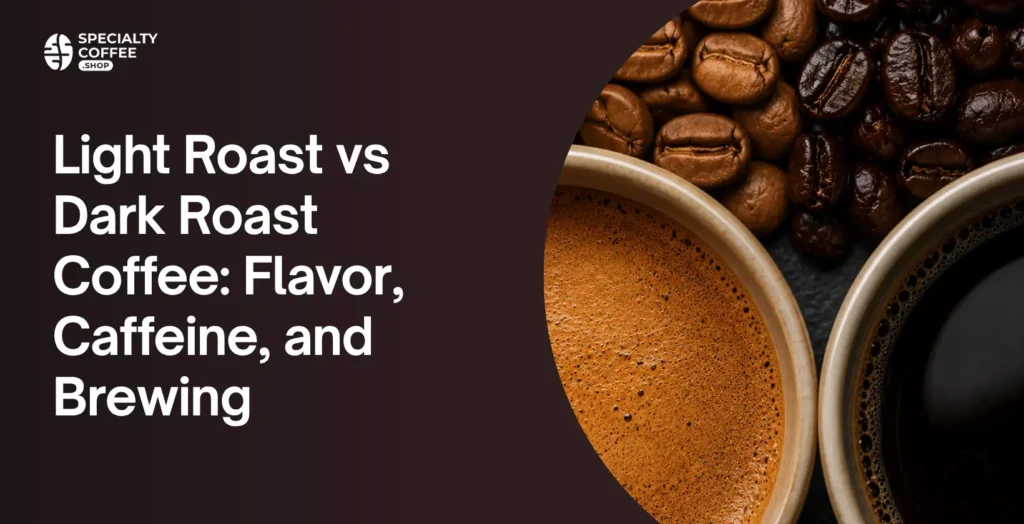
Light roast vs dark roast coffee differ mainly in roast time, flavor, and body, not in caffeine strength. Roast level decides acidity, sweetness, aroma, and how much origin character survives in the cup. That single choice reshapes your whole morning ritual. This guide compares taste, caffeine, and brewing so the decision becomes simple.
In a light roast vs dark roast coffee comparison, light roasts stop near first crack around 196°C to 205°C to keep bright, fruity acidity, while dark roasts run to 225°C or beyond for a bold, smoky, low-acid cup. Caffeine stays nearly equal once you weigh the dose instead of scooping it.
What Is the Difference Between a Light Roast and a Dark Roast?
The difference is roast duration and final bean temperature, which reshape flavor, body, acidity, and color. Light roasts finish at or just after first crack. Dark roasts continue to or past second crack.
Light roasts finish around 196°C to 205°C (385°F to 401°F) in roughly 6 to 9 minutes, keeping high acidity and floral, fruity, tea-like notes. Dark roasts push to about 225°C to 245°C (437°F to 473°F), often 12 to 15 minutes, trading origin clarity for bittersweet, smoky depth and heavier body. Medium sits between, developed past first crack but pulled before second crack.
The light roast vs dark roast coffee question comes down to how far heat and time push the bean. For a full breakdown of every stage, see our guide to coffee roast levels.
How Does Roast Level Shape Flavor and Aroma?
Roast level shapes flavor through three levers: the drying phase, the Maillard reaction, and development time after first crack. Each lever moves the cup from bright and acidic toward dark and bittersweet. The drying phase removes moisture in the first minutes, up to about 160°C. The Maillard reaction then browns sugars and amino acids from roughly 160°C to 195°C, building nutty, caramel, and bready aromas. First crack arrives near 196°C, when steam pressure fractures the bean and marks the start of development time.
Development time is the window after first crack, often 15% to 25% of total roast, where roasters lock in balance. Too short tastes grassy and sour. Too long tastes flat and roasty. Light roasts spend little time in this window and preserve origin acidity. Dark roasts extend toward second crack near 224°C, where oils surface and roast flavor dominates. Understanding these levers makes the light roast vs dark roast coffee choice less about labels and more about the flavors you want. For sensory research on how roasting develops flavor, the Specialty Coffee Association research program is a solid reference.
Light Roast vs Dark Roast Coffee: Flavor and Caffeine Compared
Light and dark roast sit at opposite ends of one spectrum, and the table below compares the traits that change the cup most.
| Attribute | Light Roast | Dark Roast |
|---|---|---|
| Roast end temp | ~196-205°C (385-401°F) | ~225-245°C (437-473°F) |
| Roast stage | At or just after first crack | At or past second crack |
| Acidity | High, bright | Low, muted |
| Body | Light to medium | Full, heavy |
| Flavor notes | Floral, fruity, citrus, tea-like | Chocolate, smoky, bittersweet |
| Origin character | Prominent | Faded |
| Surface | Dry, matte | Often oily, shiny |
| Caffeine by weight | Virtually equal | Virtually equal |
| Caffeine by scoop (volume) | Slightly more | Slightly less |
| Best brew methods | Pour-over, filter | Espresso, milk drinks |
That light roast vs dark roast coffee spread is easy to taste within a single lot. In our own cupping, a washed Uganda Bugisu from the Mount Elgon region showed juicy citrus and cane sugar at a light roast, then leaned toward cocoa and a rounder body when taken darker. The green bean was identical. Only the roast changed.
Does Dark Roast Coffee Have More Caffeine Than Light Roast?
No. Dark roast does not carry more caffeine than light roast. Caffeine is heat-stable and survives roasting almost intact.
Arabica beans hold roughly 1.2% caffeine by weight, and that figure barely moves during roasting, because caffeine breaks down only above temperatures roasters rarely reach. The real variable is measurement. Weighed on a scale, light and dark deliver nearly identical caffeine. Scooped by volume, light roast wins, because denser light-roasted beans pack more mass per scoop. Controlled test-kitchen brewing found a light roast can carry noticeably more caffeine than dark when measured by volume, yet the two match almost exactly by weight.
This is the most repeated myth in the light roast vs dark roast coffee debate, and weighing your dose settles it. A common ratio is 60 g of coffee per 1 liter of water. Bean species matters far more than roast: robusta holds close to twice the caffeine of arabica. See how species changes taste and strength in our guide to arabica vs robusta taste.
How Should You Brew Each Roast for the Best Cup?
Match the brew method to the roast. Light roasts shine in pour-over and filter, where clarity reveals acidity and aroma. Dark roasts suit espresso and milk drinks, where bold flavor cuts through dairy.
- Light roast, pour-over (V60, Chemex): grind medium-fine, water 94°C to 96°C, ratio near 1:16, aim for bright, layered flavor.
- Light roast, batch filter: the same higher water temperature helps extract dense, hard beans fully.
- Dark roast, espresso: grind fine, use cooler water around 90°C to 92°C to limit bitterness.
- Dark roast, milk drinks: the heavy body stands up to milk, ideal for lattes and cappuccinos.
- Either roast, cold brew: coarse grind, long steep, a smooth low-acid result.
Light-roasted beans are denser and harder, so they reward hotter water and slightly finer grinds. Dark-roasted beans dissolve faster and turn bitter quickly, so cooler water and shorter contact help. Single origins like Ethiopia Yirgacheffe and Kenya AA reward a lighter roast and a careful pour-over. Brewing is where the light roast vs dark roast coffee difference shows up most clearly in the cup.
Common Mistakes When Choosing a Roast
The most common mistakes are judging strength by color, scooping instead of weighing, and assuming dark always makes better espresso.
- Equating dark with strong. Roast level is flavor character, not caffeine.
- Measuring by scoop. Volume dosing skews caffeine and strength between roasts.
- Buying stale dark roast. Surface oils on dark beans go rancid faster once the bag opens.
- Ignoring roast date. Freshness affects the cup more than roast level does.
- Over-roasting good beans. Specialty lots lose their origin story past second crack.
Specialty coffee is defined by traceability and cup quality, not by how dark it is roasted. See specialty coffee vs commercial coffee for that distinction. Avoiding these traps makes the light roast vs dark roast coffee decision easier and cheaper over time.
Which Roast Should You Buy?
Buy light if you want brightness, origin clarity, and complexity. Buy dark if you want boldness, low acidity, and a classic roasted taste. Medium bridges both.
For pour-over drinkers chasing fruit and florals, a light-to-medium single origin fits best. For espresso, milk drinks, or a comforting bold cup, a darker roast delivers. Across the single-origin lots we curate, high-grown washed arabica such as our Mount Elgon Uganda Bugisu keeps more clarity at lighter roasts, which is why altitude and origin belong on the label. A balanced, sweet option like Colombia Huila suits drinkers moving from dark toward lighter profiles.
On how variety and growing conditions shape a bean before any roast, World Coffee Research variety data is open and reliable, and the ICO Coffee Market Report tracks wider production and consumption trends. Your budget, brewer, and taste settle the light roast vs dark roast coffee decision more than any rule.
Frequently Asked Questions
Is light roast or dark roast better for beginners?
Neither is objectively better; it depends on taste. Beginners who like bold, familiar, low-acid coffee often start with dark or medium roasts. Those curious about fruit, floral, and citrus notes should try light roasts. Buy small amounts of both, brew them the same way, and compare the cups directly.
Does dark roast coffee taste stronger than light roast?
Yes, dark roast usually tastes stronger because of bolder, more bitter, smoky flavors, not because of more caffeine. Strength in flavor comes from longer roasting, which breaks down sugars and builds roasty compounds. Perceived strength and actual caffeine are different things. Weigh your dose if caffeine consistency matters to you.
How do you choose between light roast vs dark roast coffee for espresso?
Choose based on the flavor you want in the shot. Dark and medium-dark roasts pull sweeter, fuller espresso that cuts through milk, which is why they dominate cafes. Light roasts can make bright, fruit-forward espresso but need finer grinding and careful dialing. Start medium-dark if you are new to pulling shots.
Which roast has more antioxidants?
Light roasts generally retain more chlorogenic acids, while dark roasts develop more melanoidins during the Maillard reaction. Both provide antioxidant compounds, just different ones, so neither roast is clearly healthier. Overall diet, brewing method, and any added sugar or cream affect health impact far more than roast level alone does.
Can you taste the coffee’s origin in a dark roast?
Barely. Dark roasting masks most origin character because roast-driven flavors like smoke and bittersweetness dominate the cup. Light and medium roasts preserve terroir, showing the fruit, acidity, and floral notes tied to variety, altitude, and processing. If origin flavor matters to you, choose lighter roasts of traceable single-origin beans.
Should you store light roast vs dark roast coffee differently?
Yes, treat dark roast with extra care. Dark roasts push oils to the surface, so they go stale and rancid faster once bags open. Store both in airtight, opaque containers away from heat, light, and moisture. Buy smaller, fresher amounts and check the roast date, which matters more than the roast level.
Why does the light roast vs dark roast coffee debate matter for specialty coffee?
It matters because roast level decides how much of a specialty bean’s traceable character reaches your cup. Careful light-to-medium roasting protects the flavors tied to origin, variety, and altitude that make single-origin coffee worth buying. Darker roasting can flatten those distinctions, turning a distinctive lot into a generic bold cup.
Choose Your Best Beans with the Finest Roasts!
Ultimately, the light roast vs dark roast coffee choice is about flavor priorities, not caffeine. Light keeps origin brightness; dark trades clarity for bold depth; medium balances both. Weighing your dose fixes strength worries. Curated single-origin specialty coffee from major producing countries, verified for quality and traceable to its source, lets you taste those differences.
Ready to taste the difference yourself? Explore the full range of curated single-origin beans, from washed Uganda Bugisu to other origins, at the SpecialtyCoffee.Shop homepage. Compare roast-friendly lots, check each coffee’s traceable details, and request a sample before you commit. See what is available, then brew your own side-by-side comparison and decide with real confidence.


