

Green coffee moisture content is the percentage of water held inside unroasted coffee beans, and specialty green coffee is expected to sit between 10% and 12% moisture. Green coffee moisture inside this range protects aroma and sweetness while keeping mold away.
Moisture also shapes how green coffee ages in storage, how the beans behave in a roaster, and what water activity reading a lab reports. The sections below cover the ideal range, processing effects, and water activity. The sections also cover measuring methods and the storage rules that keep green coffee stable.
What Is Green Coffee Moisture Content?
Green coffee moisture content is the share of a green bean’s total weight that is water, expressed as a percentage on a wet basis. A green coffee sample at 11% moisture contains 11 grams of water in every 100 grams of beans. Green coffee moisture content is set at origin during drying. Coffee cherries or parchment lose water from roughly 60% in fresh cherry to the export level of 10–12%.
Moisture content is one of the first numbers a green coffee buyer checks because moisture controls three outcomes. The three outcomes are cup quality, shelf stability, and roasting yield. Sellers of bulk lots report moisture on the contract and on the pre-shipment sample. The moisture figure therefore appears next to screen size and defect count in a wholesale coffee buying guide.
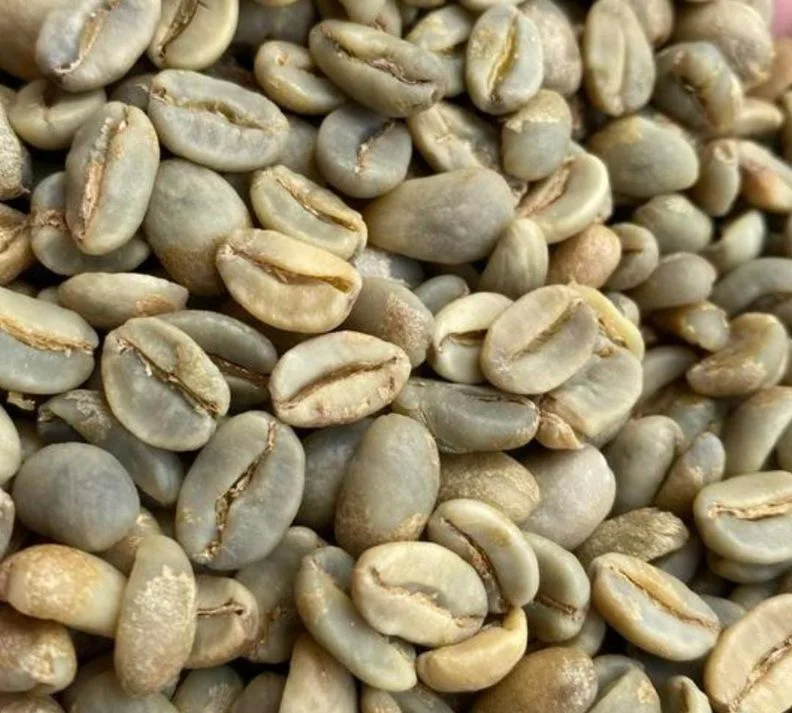
What Is the Ideal Moisture Content for Green Coffee?
The ideal moisture content for specialty green coffee is 10–12%, and many importers aim for 10.5–11.5%. The table below compares the main reference ranges used in the green coffee trade.
| Reference | Moisture range | Use |
|---|---|---|
| Specialty Coffee Association (SCA) green coffee standard | 10–12% | Washed specialty coffee at import |
| International Coffee Organization (ICO) | 8–12.5%, with about 11% as a practical target | Exportable green coffee |
| Common importer target | 10.5–11.5% | Long-term stability of specialty lots |
The SCA range is the tightest benchmark for specialty grading, while the ICO range covers all exportable coffee. Green coffee at the low end of the range ages more slowly in a dry warehouse. Green coffee at the high end keeps more sweetness but needs closer storage control.
What Happens When Green Coffee Moisture Is Too High?
Green coffee moisture above 12% increases the risk of mold, fermentation defects, and faster loss of quality. The four main problems of high-moisture green coffee are listed below.
- Mold growth: Molds such as Aspergillus grow faster on beans above 12% moisture, especially in warm and humid warehouses.
- Musty and earthy defects: Excess water supports microbial activity that adds musty, earthy, or phenolic notes to the cup.
- Uneven roasting: Wet beans need a longer drying phase, and the bean surface can scorch while the core stays underdeveloped.
- Higher weight loss: Roasters pay for water that evaporates in the drum, so a high-moisture lot yields fewer kilograms of roasted coffee.
High moisture is the most expensive moisture problem because mold damage cannot be reversed after the coffee leaves origin.
What Happens When Green Coffee Moisture Is Too Low?
Green coffee moisture below 10% causes faster staling, a flat or papery cup, and a quicker roast. Over-dried beans lose aromatic compounds, and acidity fades within months of arrival. Over-dried green coffee also becomes brittle, so beans chip more easily during hulling and shipping. Roasters often reduce the charge temperature for a low-moisture lot because heat moves through dry beans faster.
How Does Processing Method Affect Green Coffee Moisture?
Processing method changes green coffee moisture because each method dries the bean in a different form and for a different length of time. The table below compares the typical moisture behavior of four common processing methods.
| Processing method | Drying form | Moisture behavior |
|---|---|---|
| Washed | Parchment after fermentation and washing | Dries evenly; usually exported at 10–12% |
| Natural (dry) | Whole cherry | Dries slowly; uneven drying can leave pockets of higher moisture |
| Honey | Parchment with mucilage | Sticky mucilage slows drying; needs frequent turning |
| Wet-hulled (giling basah) | Parchment removed while wet | Bean dries without parchment; arrives near the top of the range more often |
Washed coffee gives the most predictable moisture reading, while natural and honey lots depend on careful turning on raised beds. Wet-hulled coffee from Sumatra and Sulawesi is hulled at a high moisture level and finished as naked green beans.
The hulling step is explained in the guide to the wet-hulled coffee process. Buyers of Indonesian lots check moisture and water activity together for that reason. The broader comparison of drying steps sits in the overview of coffee processing methods.
What Is Water Activity in Green Coffee?
Water activity in green coffee is the share of the bean’s water that is free to move and react, on a scale from 0 to 1 aw. Water activity differs from moisture content because a bean can hold water that is chemically bound and unavailable to microbes. A green coffee water activity between 0.45 and 0.55 aw is widely treated as stable, and that window corresponds roughly to 10.5–11.5% moisture.
Water activity predicts microbial and chemical stability better than total moisture does. Water activity above about 0.60 aw supports mold growth, and water activity that drifts upward in storage signals a lot that will age quickly.
Moisture Content vs Water Activity: What Is the Difference?
Moisture content measures how much water green coffee holds, while water activity measures how much of that water is available to react. The two numbers move together but do not convert exactly.
A long-term water activity study by importer Cafe Imports published in 2019 found an error of about one percentage point when predicting moisture from water activity. A lab therefore cannot name an exact moisture figure from aw alone.
| Attribute | Moisture content | Water activity |
|---|---|---|
| Unit | % of bean weight | aw, from 0 to 1 |
| Specialty target | 10–12% | 0.45–0.55 aw |
| Best use | Contracts, roasting yield, export checks | Storage stability, mold risk, aging |
| Typical tool | Capacitance moisture meter | Water activity meter (dew point sensor) |
Moisture content remains the trade standard on contracts, and water activity adds a second check for lots that will sit in storage for many months.
How Is Green Coffee Moisture Content Measured?
Green coffee moisture content is measured with an oven reference method in laboratories and with calibrated electronic meters at farms, warehouses, and roasteries. The reference method is ISO 6673, which determines moisture from the loss in mass of green coffee dried in an oven at 105 °C for 16 hours. Electronic meters estimate moisture from the electrical properties of the beans, so every meter needs calibration against the oven method.
There are 5 steps to measure the moisture of a green coffee sample with an electronic meter.
- Select the meter setting for green coffee, not parchment or roasted coffee.
- Bring the sample to room temperature, because cold beans give a low reading.
- Fill the meter cell to the marked level with a representative sample from several bags.
- Take three readings and record the average.
- Compare the average with the reading on the contract or pre-shipment sample.
A difference of more than one percentage point between the meter and the contract figure is a reason to request a laboratory test before roasting the lot.
Which Tools Measure Green Coffee Moisture?
Three types of tools measure green coffee moisture in the coffee trade, and the tools are listed below.
- Capacitance moisture meter: Measures the dielectric response of the beans in seconds; models such as the Sinar AgriPro and the RoastRite RM-800 report moisture and bean density.
- Laboratory oven: Measures moisture by weight loss under ISO 6673 and serves as the reference for calibrating meters.
- Water activity meter: Measures free water with a dew point or capacitive humidity sensor and reports aw instead of percentage moisture.
Roasteries that buy several origins each year usually own a capacitance meter and send disputed samples to a laboratory.
How Does Moisture Content Affect Coffee Roasting?
Moisture content affects coffee roasting by changing the length of the drying phase, the heat needed at charge, and the final weight loss. High-moisture green coffee absorbs more energy before browning starts, so the roaster extends the drying phase or raises the charge temperature. Low-moisture green coffee heats faster and reaches first crack sooner, so the roaster lowers heat earlier to avoid a flat, roasty cup.
Moisture also changes roasting yield. A green coffee lot at 12% moisture loses more weight in the roaster than the same coffee at 10%, because the extra water evaporates. Roasters record green moisture with every batch to keep the roast profile repeatable across a lot and to price roasted coffee correctly.
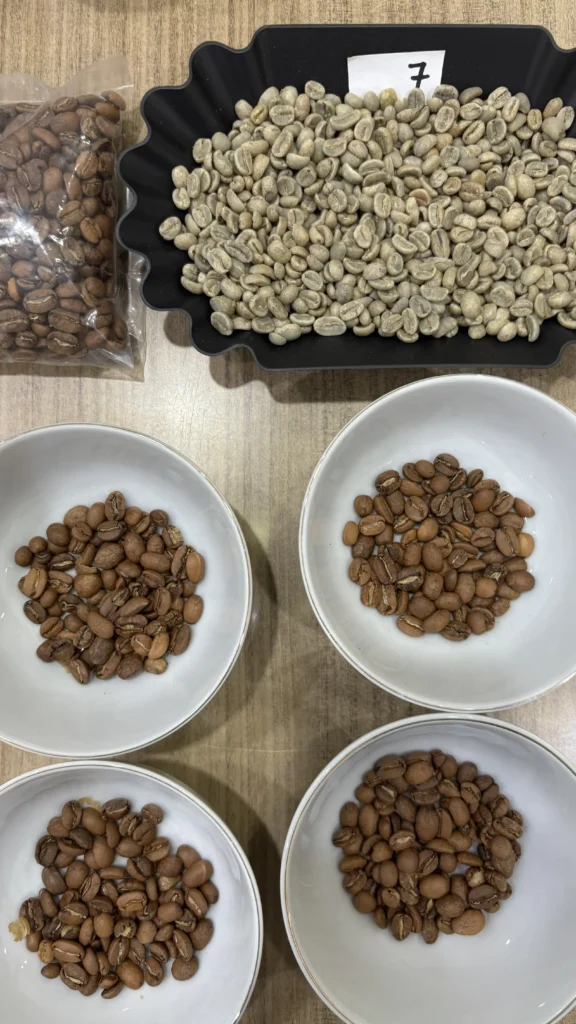
How Should Green Coffee Be Stored to Keep Moisture Stable?
Green coffee keeps a stable moisture level in cool, dark storage near 60% relative humidity and 15–25 °C (59–77 °F). Green coffee is hygroscopic, which means green coffee absorbs or releases water until the beans match the surrounding air. A green coffee storage study from North Carolina State University found that green coffee kept at 75% relative humidity rose to about 14% moisture within 12 weeks.
There are 4 rules for storing green coffee without moisture drift.
- Keep green coffee in hermetic liners, such as GrainPro bags, inside the jute sacks.
- Store sacks on pallets away from walls, floors, and direct sunlight.
- Monitor warehouse humidity and temperature with a data logger.
- Re-measure moisture every 2–3 months on lots held longer than one season.
Stable storage keeps a green coffee lot close to its arrival score, which matters for coffees bought on cupping results. The way specialty lots are scored is described in the guide to coffee cupping and scoring.
What Moisture Data Should Green Coffee Buyers Ask For?
Green coffee buyers should ask for moisture content, water activity, harvest date, and processing method before confirming a lot. The five data points below help a buyer judge how a green coffee will age and roast.
- Moisture content: The percentage measured at export and on the pre-shipment sample.
- Water activity: The aw reading, especially for natural, honey, and wet-hulled lots.
- Harvest and drying dates: Dates that show how long the coffee has rested since drying.
- Packaging type: Hermetic liner or plain jute, which predicts moisture drift in transit.
- Cup score at arrival: The score that confirms the moisture level has not damaged quality.
Moisture data works together with the cup score. A lot that meets the SCA 80+ specialty threshold at origin keeps that grade only inside the stable moisture range. Specialty Coffee Shop lists moisture content on each green coffee offer sheet [add your first-hand experience/data].
Frequently Asked Questions
1. Is 13% moisture too high for green coffee?
Yes, 13% moisture is too high for specialty green coffee because the figure sits above the 12% limit used by the SCA. Green coffee at 13% moisture carries a higher mold risk and loses more weight in roasting. A 13% lot needs prompt roasting or drier storage, and a water activity test shows how urgent the risk is.
2. What is the moisture content of roasted coffee?
Roasted coffee usually contains about 1–3% moisture, because roasting evaporates most of the water held in green coffee. Darker roasts end with lower moisture than lighter roasts. Roasted coffee then absorbs moisture from the air, which is one reason freshness drops after the bag is opened.
3. Can green coffee beans absorb moisture from the air?
Yes, green coffee beans absorb moisture from the air because green coffee is hygroscopic. Green coffee stored in humid air gains moisture and water activity over weeks, while green coffee stored in very dry air loses moisture and becomes papery. Hermetic bags slow both changes.
4. How long does green coffee stay stable at the right moisture?
Green coffee at 10–12% moisture usually stays stable for about 6–12 months in hermetic packaging and controlled storage. Washed coffees often hold quality longer than natural coffees. Regular cupping shows when a lot starts to fade.
Choosing Green Coffee With the Right Moisture
Green coffee moisture content between 10% and 12% is the clearest sign that a lot was dried and stored correctly. A water activity near 0.45–0.55 aw confirms that stability. Ask for both readings on every offer, measure moisture again on arrival, and store green coffee in hermetic liners at moderate humidity.
Roasters and cafes looking for specialty lots with documented moisture can request samples through the Specialty Coffee Shop sample program.